The Gift of Time and the Magic of Play: Meaningful Holiday Gifts for Young Children
This holiday season, discover why the gifts of time, imagination, and connection, along with the simple toys that encourage creative play, can bring some of the greatest joy to young children and their families.
by Cigdem Unal, Director, Office of Child Care and Family Resources
As December approaches and the holiday season fills our calendars, many families begin thinking about gifts for their children. Store shelves are filled with colorful toys, advertisements promise endless excitement, and we find ourselves wondering what might bring the biggest smile to a child’s face.
Over more than 25 years in early childhood education, including several years as a teacher in early childhood classrooms, I’ve come to believe that some of the most meaningful gifts we can give young children are also the simplest.
Our time. Our attention. Our willingness to slow down, get on the floor, and enter their wonderful world of imagination.
I have spent countless hours watching young children turn ordinary objects into extraordinary adventures. They turn building blocks into castles and cardboard boxes into spaceships. What has always fascinated me is not just what children build, but the thinking, creativity, persistence, and joy that unfold along the way. And perhaps the most beautiful part is watching what happens when a caring adult joins them—not to direct their play, but to share in their discovery.
The Most Meaningful Gift May Be Your Time

For UW–Madison families balancing classes, research, work, and caregiving, along with the many responsibilities of everyday life, finding uninterrupted family time isn’t always easy. The holidays can bring additional excitement, but also additional expectations.
Yet creating meaningful memories doesn’t require elaborate plans or expensive outings. Sometimes it’s as simple as reading one more bedtime story or building a blanket fort in the living room.
When we put aside distractions and give children our attention, we communicate something powerful: that we see them, we enjoy being with them, and that their ideas matter.
These everyday moments strengthen relationships, nurture children’s sense of belonging, and create wonderful opportunities for conversation, learning, and connection. The American Academy of Pediatrics emphasizes that play supports children’s healthy development while strengthening relationships with parents and caregivers. Meaningful time together doesn’t have to be measured in hours; even small moments of genuine connection can be deeply valuable.
Choosing Toys That Spark Imagination, Not Just Entertainment
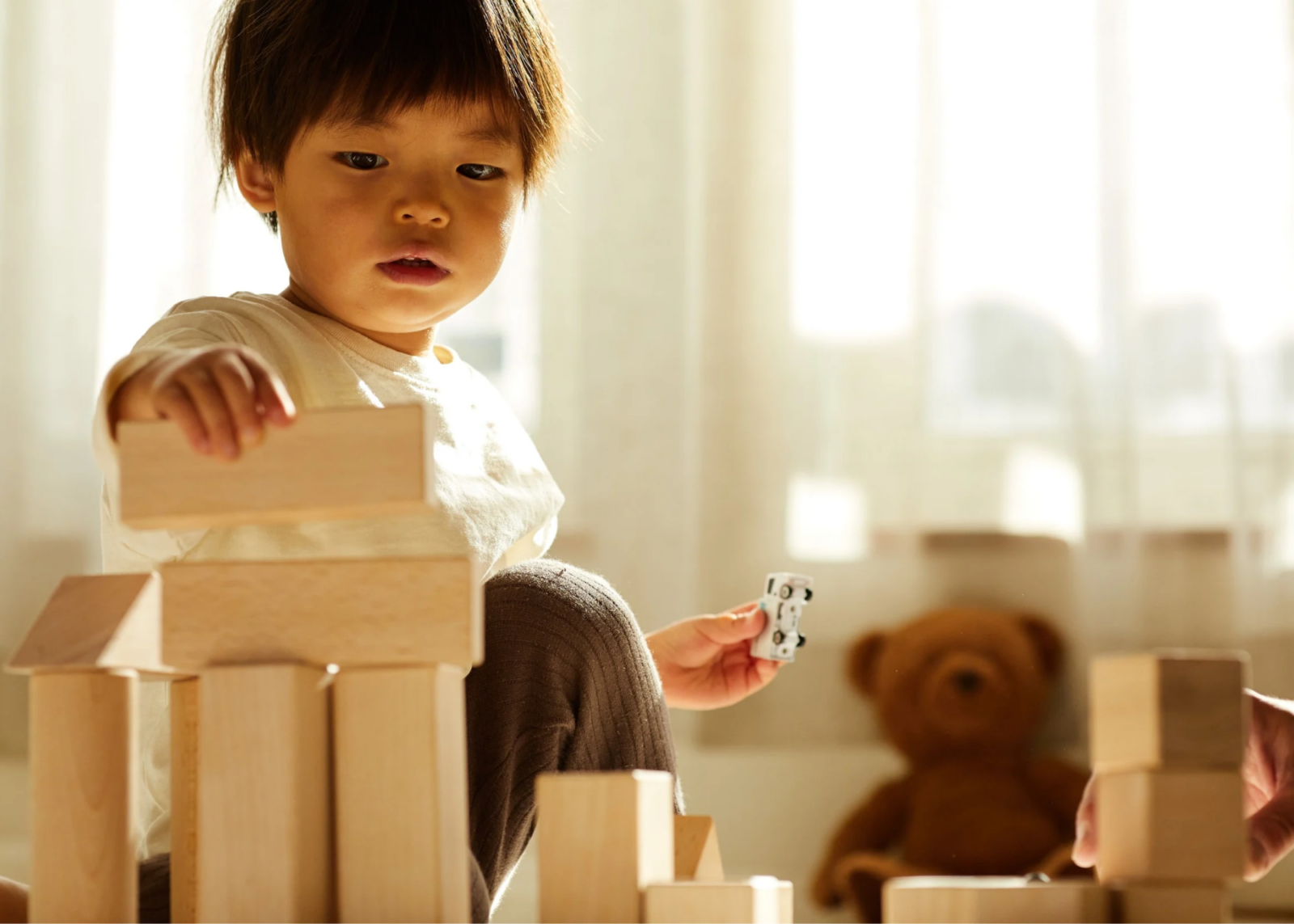
Over the years, I have often encouraged families to look for toys that allow children to do the thinking, creating, exploring, and imagining. In early childhood education, we call these open-ended materials—toys and objects that children can use in many different ways, without a single correct answer or predetermined outcome.
Think about traditional wooden blocks, interlocking building bricks, magnetic construction tiles, or other age-appropriate construction materials. One day, a child might build a bridge. The next day, those same pieces become a zoo, a submarine, a neighborhood, or an invention that has never existed before.
These materials invite children to experiment, solve problems, develop spacial awareness, practice fine-motor skills, and think creatively. They also encourage persistence as children discover something that doesn’t work the first time might work differently the next. Perhaps most importantly, these materials give children freedom to follow their ideas and experience the joy of discovery.
The best toys don’t tell what children what to do; they invite children to imagine what is possible.
Simple Gifts That Grow with Children’s Imaginations
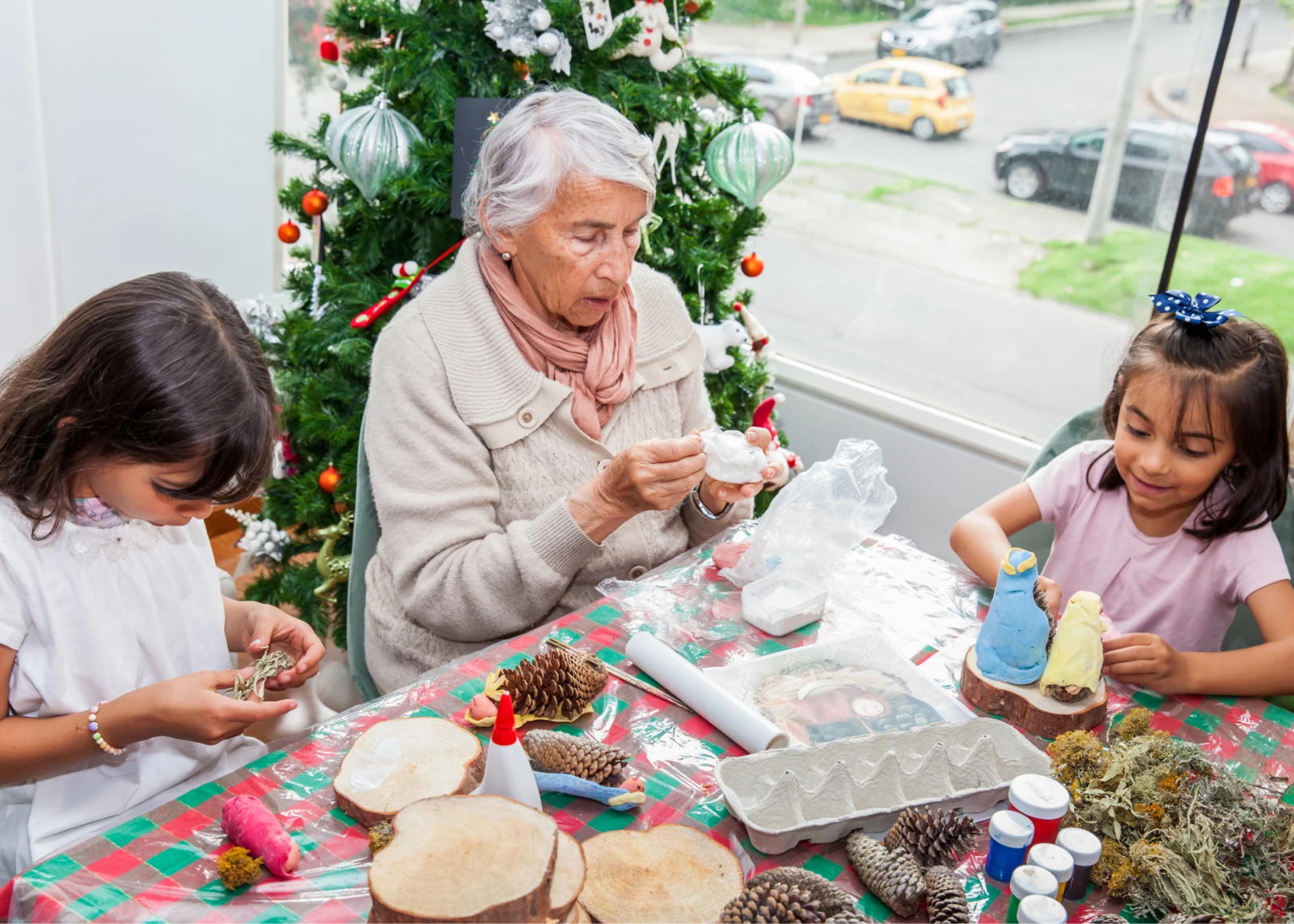
If you are considering gifts this holiday season, here are several types of play materials that encourage creativity, exploration, and learning.
- Building and construction materials: Wooden blocks, interlocking building bricks, age-appropriate construction tiles, and other building sets offer possibilities for experimenting, problem-solving, and creating. Choose materials suited to each child’s age and abilities.
- Art and creative expression: Crayons, washable paints, modeling dough, colorful paper, collage materials, and child-safe art supplies invite children to express ideas freely. The joy is in exploring colors, textures, and possibilities, not producing a perfect finished product.
- Pretend-play materials: Dolls, puppets, toy animals, play kitchens, and dress-up materials inspire storytelling and imaginative adventures. Through pretend play, children explore relationships, practice communication, and make sense of the world.
- Books and storytelling: A wonderful picture book, especially one shared with someone who loves them, can be enjoyed again and again. Stories open windows into new worlds and create opportunities for closeness and conversation.
- Nature and discovery: Age-appropriate magnifying glasses, gardening tools, and outdoor experiences can inspire curiosity about the natural world and encourage children to observe, investigate, and ask questions.
And don’t overlook the magic of everyday materials! A cardboard box, a few fabric pieces, and a little imagination can sometimes provide more excitement than the most elaborate toy. The National Association for the Education of Young Children (NAEYC) encourages families to consider materials that support exploration, imagination, problem-solving, and developmentally appropriate learning.
The Gift of Experiences and Family Traditions
One of my favorite ideas is giving children experiences rather than more things. Imagine creating a small “Gift of Time Jar” filled with simple activities that your child can choose from throughout winter break.
Perhaps one day you build a blanket fort and read stories inside. Another day, you bake together, create a family art project, have a living room dance party, or bundle up for a snowy adventure. you might visit a local library, make homemade play dough, or invite loved ones to share favorite childhood stories.
These experiences do not need to be expensive or complicated. For families celebrating different holidays or simply enjoying the winter season, traditions can reflect their own cultures, values, and experiences. The most important ingredient isn’t the activity itself, it’s the connection!
A Gentle Reminder from an Early Childhood Educator
If there is one lesson I’ve learned from my years of working with young children, it is that they are naturally curious, creative, capable, and full of wonderful ideas. They don’t need us to fill every moment with activities or provide every new toy on the market. They need time to play, space to explore, opportunities to make mistakes, and caring adults who believe in their abilities.
Sometimes the most meaningful thing we can do is sit beside a child and ask them about what they’re doing, then listening.
As we approach the holiday season, I hope we can give ourselves permission to simplify. To worry a little less about finding the perfect present and focus a little more on enjoying the people right in front of us. Years from now, some of the most treasured memories may not be the gifts beneath the wrapping paper, but the laughter around the kitchen table, magnificent creations scattered across the living room floor, and the quiet joy of being together.
The greatest gift we can give children is not always something we buy. Sometimes, it is simply the gift of being fully present in their world.
From all of us at the Office of Child Care and Family Resources, we wish you and your loved ones a peaceful, joyful holiday season filled with imagination, laughter, and meaningful time together. Happy holidays!
A Few Helpful Resources for Families
For more guidance about selecting developmentally appropriate play materials and supporting children’s learning through play, consider these educational resources:
- NAEYC — Good Toys for Young Children by Age and Stage: Guidance for choosing play materials that support exploration and learning at all stages.
- American Academy of Pediatrics — The Power of Play: How play supports development, relationships, and children’s well-being.
- ZERO TO THREE — Tips for Choosing Toys for Toddlers: Suggestions fore engaging, versatile toys that grow with toddlers’ skills.
Toy safety reminder: Choose play materials appropriate for each child’s age, developmental abilities, and individual needs. Keep small parts away from children under three, and use particular caution with loose or high-powered magnets and button batteries. Follow manufacturer guidance, regularly check toys for damage and recalls, and supervise play as appropriate.
About these suggestions: The play-material examples are shared for general educational purposes. OCCFR and UW–Madison do not endorse specific toy manufacturers, brands, or commercial products. The external resources are offered for further reading and do not imply that those organizations have reviewed or endorsed this article.